
Nigeria

Nigeria News

Bauchi State Government Partners with Chinese Firm to Boost Investment and Economic Growth
2nd March, 2025 at 08:55
By Our Reporter

Bauchi, Nigeria – March 2, 2025
In a significant move to enhance economic development, the Bauchi State government has entered into strategic agreements with a Chinese company aimed at tapping into t

...

Bauchi, Nigeria – March 2, 2025
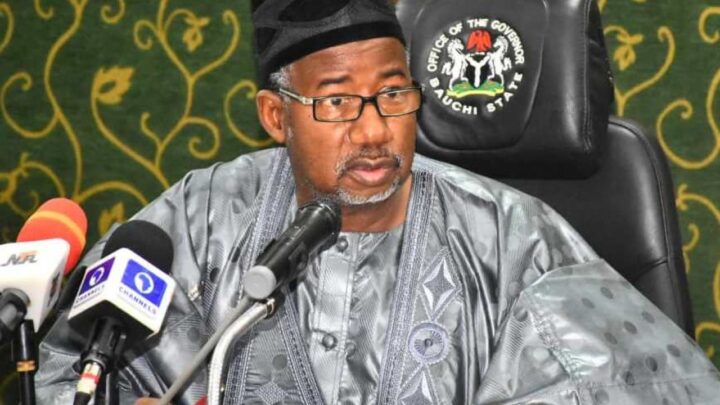
In a significant move to enhance economic development, the Bauchi State government has entered into strategic agreements with a Chinese company aimed at tapping into the state’s mineral wealth and revolutionizing its agricultural sector. The announcement, detailed in a recent video release, highlights a multi-faceted partnership designed to attract investment, create jobs, and position Bauchi as a key economic player in Nigeria.
Joint Venture for Mineral Exploration
A cornerstone of this collaboration is the establishment of BMCC Nigeria Limited, a joint venture company tasked with exploring and mining Bauchi State’s abundant mineral resources. The Bauchi State government, represented through its entity Bumel, will hold a 20% stake in the company, while Shand Mission Group, the Chinese partner, will own 80% and provide the bulk of the financing.
The partnership kicks off with an initial investment of $5 million dedicated to mineral exploration and development. This injection of capital is expected to unlock the state’s untapped geological potential, fostering economic growth and positioning Bauchi as a hub for mineral-based industries.
Large-Scale Agricultural Development
Beyond mining, the agreements include ambitious plans to transform Bauchi’s agricultural landscape. A key focus is the large-scale cultivation of cassava, with the goal of developing between 50,000 and 100,000 hectares of land for this crop. Officials are optimistic that this initiative could establish Bauchi State as the "cassava capital of Nigeria," boosting food security, creating employment opportunities, and strengthening the state’s agricultural export potential.
This move aligns with broader efforts to diversify Nigeria’s economy, reducing reliance on oil by leveraging the country’s fertile land and agricultural resources.
Investment Security Assurances
To ensure the success of this partnership, the Bauchi State government has pledged to safeguard the Chinese company’s investments, assets, and personnel. This commitment underscores the state’s determination to foster a stable and investor-friendly environment, addressing concerns about security that often deter foreign investment in Nigeria.
Economic Implications
The agreements signal a new era of international cooperation for Bauchi State, combining Chinese expertise and capital with local resources and leadership. Analysts suggest that if successful, this partnership could serve as a model for other Nigerian states seeking to attract foreign investment while maximizing their natural endowments.
As the initiatives roll out, stakeholders will be watching closely to see how these projects translate into tangible benefits for Bauchi’s residents, from job creation to infrastructure development. For now, the state government and its Chinese partners are laying the groundwork for what they hope will be a transformative economic leap forward.
Further updates on the progress of BMCC Nigeria Limited and the cassava cultivation project are expected as implementation begins.

Federal Government Plans Power Tariff Hike for Band B and C Customers in Nigeria
28th February, 2025 at 18:52
By Our Reporter

Abuja, Nigeria – February 28, 2025 – The Federal Government of Nigeria has unveiled plans to review and potentially increase electricity tariffs for customers categorized under Bands B and C, spar

...

Abuja, Nigeria – February 28, 2025 – The Federal Government of Nigeria has unveiled plans to review and potentially increase electricity tariffs for customers categorized under Bands B and C, sparking widespread concern among consumers and stakeholders. The announcement, made by the Minister of Power, Chief Adebayo Adelabu, comes as part of a broader strategy to address disparities in the current billing system and encourage investment in the nation's struggling power sector. The disclosure was made during the public presentation of the National Integrated Electricity Policy (NIEP) and Nigeria Integrated Resource Plan on Thursday, February 27, 2025, in Abuja.
Background and Rationale
Under Nigeria’s Service-Based Tariff (SBT) system, electricity consumers are grouped into bands based on the number of hours of power supply they receive daily. Band A customers, who enjoy a minimum of 20 hours of electricity, currently pay a cost-reflective tariff of N209 per kilowatt-hour (kWh). In contrast, Band B customers, receiving 16 to 18 hours of supply, pay N63 per kWh, while Band C customers, with 12 to 16 hours, pay even less. This significant pricing gap has been described as "unfair" by Minister Adelabu, who emphasized the need for a more equitable and sustainable pricing structure.
Speaking at the event, Adelabu highlighted that the slow migration of customers from Bands B and C to Band A—where they would receive more hours of electricity—has been hampered by the reluctance of Electricity Distribution Companies (DisCos) to invest in infrastructure upgrades. "The migration to Band A should have been faster, but we found out that the DisCos refuse to invest," Adelabu stated. He argued that regularizing tariffs across these bands would incentivize DisCos to improve service delivery and help bridge the gap between Bands A, B, and C.
The Minister also pointed to revenue growth as a motivating factor. He noted that the migration of some customers to Band A in 2024 led to a 70% increase in power sector revenue, rising from N1.05 trillion to N1.7 trillion. However, he clarified that the proposed tariff review does not necessarily mean an immediate hike, cautioning against misinterpretation. "I am not saying that we’re going to increase the tariff before I am misquoted," Adelabu stressed. "We will look at the tariff again to ensure it drives sector growth and upgrades aging infrastructure for a more reliable power supply."
Current Tariff Structure and Implications
The existing tariff structure has been a point of contention since its introduction. In 2024, the Nigerian Electricity Regulatory Commission (NERC) implemented a 300% tariff increase for Band A customers, raising rates from N68/kWh to N225/kWh (later adjusted to N209/kWh). This move was intended to reflect the true cost of electricity and reduce the government’s subsidy burden, which Adelabu revealed currently exceeds N200 billion monthly. However, Bands B and C have remained subsidized, with the government owing power generation and distribution companies over N4 trillion in unpaid subsidies.
The proposed tariff adjustment for Bands B and C could see these customers paying significantly more, aligning their rates closer to Band A’s cost-reflective model. While this could ease the financial strain on the government and power companies, it risks placing an additional burden on households and businesses already grappling with inflation rates nearing 35% and a weakened naira.
Public and Stakeholder Reactions
The announcement has elicited mixed reactions. Consumer groups, such as the All Electricity Consumers Forum, have condemned the plan, calling it "insensitive" at a time when stable electricity remains elusive for many Nigerians. National Coordinator Adeola Samuel-Ilori questioned the logic behind a tariff hike, arguing that the dilapidated state of distribution and transmission infrastructure undermines any justification for higher charges. "The present infrastructure of the DisCos and the Transmission Company of Nigeria is moribund," he told local media. "How can they expect the masses to pay more when they haven’t delivered on their promises?"
Small-scale industrialists have echoed these sentiments. Segun Kuti-George, National Vice President of the Nigerian Association of Small-Scale Industrialists, accused the government of being disconnected from the economic realities facing citizens. "The government is behaving as if they are ruling from outside," he lamented, pointing to recent tariff increases by telecom operators and the Nigerian Ports Authority as compounding the financial pressure on Nigerians.
On social media platforms like X, Nigerians have expressed frustration and skepticism. One user warned Band B and C customers to "prepare for a hike," while another criticized the government’s track record, noting that a previous tariff increase for Band A failed to deliver the promised 20 hours of daily supply. "This same deceptive government is now proposing tariff hikes for Band B and C households. Lol," the user remarked.
Government’s Defense and Next Steps
The Federal Government has framed the tariff review as a necessary step to ensure the sustainability of the power sector. Adelabu emphasized that continuous improvements to distribution and transmission infrastructure would eventually allow more consumers to transition to Band A, benefiting from longer hours of supply. He also highlighted the government’s Meter Acquisition Fund (MAF) programme, launched under the Presidential Metering Initiative (PMI), which aims to provide free meters to Band A subscribers as part of ongoing reforms.
However, critics argue that without addressing fundamental supply issues—such as inadequate generation capacity and DisCo inefficiencies—tariff hikes alone will not yield meaningful improvements. The government’s plan to restructure the tariff bands remains in the proposal stage, with further details expected in the coming weeks. Negotiations with stakeholders, including DisCos, NERC, and consumer representatives, will likely shape the final decision.
Broader Context
This development follows a series of economic reforms under President Bola Tinubu’s administration, including the removal of fuel subsidies, power tariff adjustments, and a 35% telecom tariff hike agreed upon with the Nigeria Labour Congress (NLC) earlier this month. These measures, while aimed at stabilizing the economy, have intensified financial strain on Nigerians, prompting calls for relief measures and greater accountability.
As the Federal Government moves forward with its tariff regularization plan, the focus will remain on balancing sector liquidity with affordability for consumers. For now, Band B and C customers brace for potential changes, while the nation watches to see if the promised investments and improvements in power supply will materialize.   

Breaking News: Security Frameworks Disrupted as Boko Haram Adapts with Drone Technology

28th February, 2025 at 16:37
By Our Reporter

In a significant development, the withdrawal of the Alliance of the Sahel States from Echass has shaken existing security frameworks in the region. This shift is raising concerns about the Multination

...

In a significant development, the withdrawal of the Alliance of the Sahel States from Echass has shaken existing security frameworks in the region. This shift is raising concerns about the Multinational Joint Task Force (MJTF)'s ability to effectively conduct operations against Boko Haram, a terrorist group that continues to evolve its tactics.

Reports reveal that Boko Haram has escalated its use of technology, deploying drones equipped with locally fabricated grenades in a Kamikaze-style attack on troops in Damboa last year. More recently, in 2024, the group executed a similar drone assault on troops in Waju, Damboa, and Buo States, underscoring their growing reliance on unmanned aerial systems. Experts warn that these incidents highlight terrorists’ increasing efforts to refine drone attack technology, posing a new challenge to regional security forces.

In response, military officials are emphasizing the urgent need for a comprehensive and integrated counter-unmanned aerial system to protect troops and air assets. The withdrawal of member states from the Alliance of the Sahel States, combined with Chad’s potential exit, is further complicating the MJTF’s capacity to execute joint operations effectively.

Amid these challenges, there’s a push to leverage advancements in technology and modern warfare to bolster the Nigerian Air Force’s operational capabilities. As Boko Haram adapts, the pressure is on to stay ahead of the threat.

Supreme Court Nullified LG Election in Rivers State

28th February, 2025 at 13:33
By Our Reporter

Supreme Court Declares Rivers State Local Government Election Invalid, Sacks Chairmen and Councillors
Port Harcourt, Rivers State – February 28, 2025
In a landmark ruling today, the Supreme Court of N

...

Supreme Court Declares Rivers State Local Government Election Invalid, Sacks Chairmen and Councillors
Port Harcourt, Rivers State – February 28, 2025
In a landmark ruling today, the Supreme Court of Nigeria declared the local government election conducted on October 5, 2024, by the Rivers State Independent Electoral Commission (RSIEC) invalid, effectively nullifying the results and sacking all elected chairmen and councillors across the state's 23 local government areas. The decision, delivered by Justice Jamilu Tukur, has sent shockwaves through Rivers State, intensifying the ongoing political crisis and raising questions about the governance of local councils moving forward.
Background of the Case
The October 5 election, organized by RSIEC under the administration of Governor Siminalayi Fubara, saw the Action Peoples Party (APP) secure a sweeping victory, winning 22 out of 23 local government chairmanship positions and a significant number of councillorship seats. This marked a historic shift, as it was the first time since 1999 that an opposition party dominated local elections in Rivers State, traditionally a stronghold of the ruling Peoples Democratic Party (PDP). However, the election was marred by controversy, legal challenges, and allegations of irregularities from the outset.
The All Progressives Congress (APC), led by factions loyal to former Governor and current Minister of the Federal Capital Territory (FCT), Nyesom Wike, contested the election's validity. The APC argued that RSIEC failed to comply with key provisions of the Electoral Act and Rivers State electoral laws, including the mandatory 90-day notice period before fixing the election date and the proper update and revision of the voters' register. This led to a series of legal battles across various courts, culminating in today’s Supreme Court verdict.
Supreme Court Ruling
In its unanimous decision, the Supreme Court upheld an earlier ruling by the Federal High Court in Abuja, presided over by Justice Peter Lifu, which had barred the Independent National Electoral Commission (INEC) from releasing the voters' register to RSIEC and prohibited security agencies from providing protection for the election. Justice Tukur, delivering the lead judgment, stated that the election was conducted in "gross violation of Section 150 of the Electoral Act 2022" and lacked substantial compliance with electoral laws and guidelines.
The court highlighted several procedural lapses, including RSIEC’s continuation of voter registration after the election date was announced and its failure to adhere to the legally required timelines for election preparations. "The processes leading up to the local government election were rushed and clearly violated the Electoral Act," Justice Tukur emphasized, declaring the entire exercise "illegal, null, and void."
As a result, the Supreme Court invalidated the election outcome, effectively sacking the chairmen and councillors who had been sworn in following the polls. The ruling has immediate implications for local governance in Rivers State, leaving the councils without elected leadership and raising concerns about how they will be administered pending a fresh election.
Political Reactions
The verdict has deepened the political rift between Governor Fubara and his predecessor, Nyesom Wike, whose loyalists within the APC spearheaded the legal challenge. Wike’s camp hailed the ruling as a victory for due process and the rule of law. Joseph Daudu, SAN, representing the APC, argued before the court that the election undermined democratic principles, a stance the Supreme Court appeared to affirm.
Conversely, Governor Fubara’s administration, represented by Yusuf Ali, SAN, and Chris Uche, SAN (counsel to RSIEC), had urged the court to dismiss the APC’s appeal, citing a prior Court of Appeal ruling that overturned the Federal High Court’s initial decision to halt the election. The appellate court had argued that Section 28 of the Electoral Act applied only to federal elections, not state-conducted local polls, and that the Federal High Court lacked jurisdiction over the matter. However, the Supreme Court’s final ruling has overridden these arguments, siding with the APC’s position.
Posts on X reflect a mix of sentiments, with some users celebrating the decision as a blow to Fubara’s administration, while others expressed dismay over the disruption to local governance. “Anybody wey loot for the 23 LGA will be arrested,” one X user quipped, hinting at fears of financial mismanagement during the brief tenure of the sacked officials.
Implications for Rivers State
The invalidation of the October 5 election comes against the backdrop of a broader Supreme Court directive on July 11, 2024, mandating that all states without democratically elected local governments conduct elections within three months. This earlier ruling, in the case of Attorney-General of the Federation vs. Attorney-General of Abia State & 35 Ors., aimed to ensure local government autonomy and prevent states from relying on caretaker committees. With today’s decision, Rivers State now faces the urgent task of organizing a fresh election to comply with this mandate, though no timeline has been specified yet.
Legal experts note that the ruling underscores the judiciary’s role in upholding electoral integrity but also highlights the challenges of conducting credible local elections under politically charged conditions. The absence of elected officials could lead to the appointment of interim administrators, a move that may spark further contention given the state’s polarized political landscape.
What’s Next?
The Supreme Court’s decision leaves Rivers State at a crossroads. Governor Fubara’s administration must now decide how to proceed with local governance while preparing for a new election that meets legal standards. Political analysts predict heightened tensions between the Fubara and Wike factions, with the outcome of the next election likely to serve as a litmus test for their respective influences in the state.
For residents of Rivers State, the ruling introduces uncertainty about service delivery and local administration, particularly as the sacked chairmen had only been in office for less than five months. Calls for accountability are already emerging, with some demanding investigations into the activities of the ousted officials during their brief tenure.
As of now, the Supreme Court has not provided explicit directives on the next steps beyond nullifying the election, leaving it to RSIEC and the state government to chart the path forward. The nation watches as Rivers State navigates this latest chapter in its tumultuous political saga.