

Nigeria News
Impeachment Process Initiated Against Governor Fubara in Rivers State
17th March, 2025 at 14:50
By Our Reporter
Port Harcourt, Rivers State – March 17, 2025
.jpeg) The Rivers State House of Assembly has formally commenced impeachment proceedings against Governor Siminalayi Fubara and his deputy, Prof. Ngozi Ordu, cit
The Rivers State House of Assembly has formally commenced impeachment proceedings against Governor Siminalayi Fubara and his deputy, Prof. Ngozi Ordu, cit
... The Rivers State House of Assembly has formally commenced impeachment proceedings against Governor Siminalayi Fubara and his deputy, Prof. Ngozi Ordu, cit
Port Harcourt, Rivers State – March 17, 2025
The Rivers State House of Assembly has formally commenced impeachment proceedings against Governor Siminalayi Fubara and his deputy, Prof. Ngozi Ordu, citing allegations of gross misconduct. The move, announced on Monday, marks a significant escalation in the ongoing political crisis in the oil-rich state.
The Rivers State House of Assembly has formally commenced impeachment proceedings against Governor Siminalayi Fubara and his deputy, Prof. Ngozi Ordu, citing allegations of gross misconduct. The move, announced on Monday, marks a significant escalation in the ongoing political crisis in the oil-rich state.The impeachment notice, signed by 26 of the 32 assembly members and tabled before Speaker Martins Amaewhule, accuses Governor Fubara of multiple infractions, including reckless and unconstitutional expenditure of public funds, obstructing the legislative functions of the House, and appointing individuals to government positions without required screening and confirmation. A separate notice was also issued against Deputy Governor Ngozi Ordu, alleging misconduct in the performance of her duties. Both notices were framed under Section 188 of the 1999 Constitution of Nigeria (as amended), which outlines the legal process for removing a governor or deputy governor.
The development follows weeks of tension between Governor Fubara and the state legislature, largely dominated by lawmakers loyal to Fubara’s predecessor and current Federal Capital Territory Minister, Nyesom Wike. The immediate trigger appears to be Fubara’s recent attempt to re-present the 2025 budget to the Assembly, in compliance with a Supreme Court ruling affirming the legitimacy of the Amaewhule-led House. However, the governor was denied entry to the Assembly complex last week, an action lawmakers cited as evidence of his unwillingness to adhere to due process.
Speaker Amaewhule, in a letter to Governor Fubara, urged him to respond to the allegations within 14 days, as stipulated by the Constitution. “The House shall resolve by motion, without debate, whether or not the allegations shall be investigated,” the letter stated, signaling the next step in the impeachment process.
The move has sparked mixed reactions across Rivers State. Supporters of the Assembly argue that Fubara’s actions, including withholding lawmakers’ salaries and allowances, justify the impeachment push. Critics, however, see it as a power play orchestrated by Wike to destabilize Fubara’s administration. The Ijaw National Congress (INC) and other pro-Fubara groups have warned of severe unrest if the impeachment proceeds, with some threatening to disrupt oil facilities in the Niger Delta, a region critical to Nigeria’s economy.
Governor Fubara has yet to publicly respond to the impeachment notice, though he previously vowed to resist attempts to derail his governance. Meanwhile, the Peoples Democratic Party (PDP) has condemned the process, calling it an assault on democracy, while the Rivers State All Progressives Congress (APC), led by Tony Okocha, has openly supported the lawmakers’ actions, urging Fubara to resign or face removal.
As the 14-day window for Fubara’s response begins, political analysts predict a contentious battle ahead, with potential implications for stability in Rivers State and beyond. The nation watches closely as this unfolds, with calls for President Bola Tinubu to intervene and restore calm growing louder.
Breaking News: Police Neutralize Notorious Kidnapper in Nasarawa, Recover Firearm
15th March, 2025 at 19:41
By Our Reporter
 In a significant breakthrough, the Nasarawa State Police Command has reported the death of a notorious kidnapper during an operation earlier today.
The suspect was killed in a confrontation with se
In a significant breakthrough, the Nasarawa State Police Command has reported the death of a notorious kidnapper during an operation earlier today.The suspect was killed in a confrontation with security forces, and a firearm was recovered at the scene. The operation took place in Nasarawa, a state that has been plagued by kidnapping incidents in recent years.
Authorities have not yet released the identity of the suspect, but this development is seen as a major win in the ongoing fight against crime in the region. The police have assured the public that investigations are underway to dismantle any associated criminal networks. Residents are urged to remain vigilant and report suspicious activities as efforts intensify to restore safety and security.
Stay tuned for further updates as the story develops.
New layer...
Update: Nigerian Senate Re-Invites Senator Natasha Akpoti-Uduaghan for Investigation
14th March, 2025 at 20:02
By Our Reporter
 In a surprising turn of events, the Nigerian Senate has reportedly extended a fresh invitation to Senator Natasha Akpoti-Uduaghan, the embattled lawmaker representing Kogi Central, for a new round
In a surprising turn of events, the Nigerian Senate has reportedly extended a fresh invitation to Senator Natasha Akpoti-Uduaghan, the embattled lawmaker representing Kogi Central, for a new round of investigation. This development comes barely a week after her controversial six-month suspension from legislative duties, which was announced on March 6, 2025, and follows her high-profile allegations of sexual harassment against Senate President Godswill Akpabio.Sources within the Senate indicate that the invitation is linked to ongoing scrutiny surrounding Senator Natasha’s conduct and the circumstances that led to her suspension. The initial suspension, recommended by the Senate Committee on Ethics, Privileges, and Public Petitions chaired by Senator Neda Imasuen, cited “gross misconduct” and “unruly behavior” as the basis for the disciplinary action. These charges stemmed from alleged violations including defying seating arrangements, speaking without recognition, and making abusive remarks against Senate leadership during a plenary session on February 20, 2025. However, the timing of the suspension—shortly after her petition against Akpabio—raised widespread speculation of retaliation.
Senator Natasha escalated the matter to the global stage earlier this week, addressing the Inter-Parliamentary Union (IPU) during its Women in Parliament session at the United Nations in New York on March 11, 2025. She described her suspension as “illegal” and accused the Senate of attempting to silence her for demanding a transparent investigation into her harassment claims. Her allegations have sparked international attention and polarized opinions within Nigeria, with women’s rights groups and Labour Party supporters rallying behind her, while the Senate leadership has staunchly defended its actions.
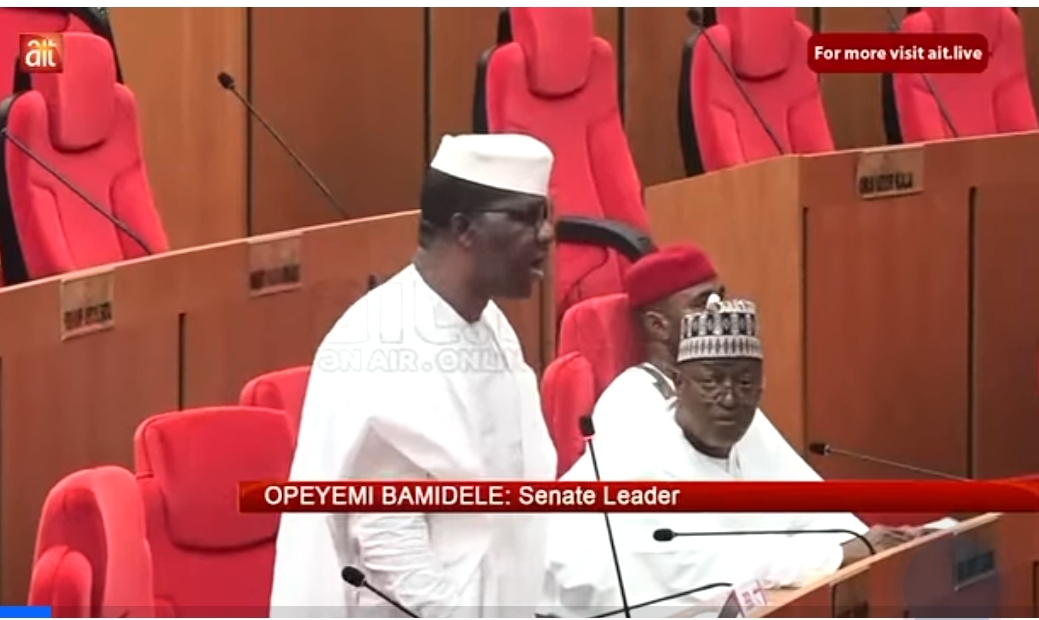
In response to her IPU address, the Nigerian Senate, through a letter penned by Senate Leader Opeyemi Bamidele and presented by Hon. Kafilat Ogbara, Chairperson of the House Committee on Women Affairs, clarified to the IPU on March 13, 2025, that Senator Natasha’s suspension was unrelated to her harassment petition. The Senate insisted it was a consequence of her persistent disregard for Senate Standing Orders. Nonetheless, Hon. Ogbara called for an independent probe into the harassment allegations, signaling that the matter remains far from resolved.
This latest invitation for investigation, details of which are yet to be fully disclosed, suggests the Senate may be reevaluating its stance or seeking to address the mounting pressure from both domestic and international observers. It remains unclear whether this probe will focus solely on the misconduct charges or extend to the harassment allegations that have cast a shadow over the Senate’s reputation.
Public reaction has been swift, with many Nigerians viewing this as a potential step toward accountability, while others question the Senate’s motives. The controversy continues to unfold as Senator Natasha’s legal challenge against Akpabio, seeking 100 billion naira ($64,000) in damages for defamation, also looms large.
As of now, neither Senator Natasha nor the Senate leadership has issued an official statement regarding the specifics of this new invitation. All eyes remain on the National Assembly as this saga tests the integrity of Nigeria’s legislative body and its commitment to fairness and justice.
Comprehensive Report on the Akpabio/Natasha Controversy: Senate Passes Vote of Confidence on Akpabio
13th March, 2025 at 13:29
By Our Reporter
 The ongoing controversy between Senate President Godswill Akpabio and Senator Natasha Akpoti-Uduaghan has gripped Nigeria’s political landscape, sparking debates about parliamentary decorum, gender
The ongoing controversy between Senate President Godswill Akpabio and Senator Natasha Akpoti-Uduaghan has gripped Nigeria’s political landscape, sparking debates about parliamentary decorum, gender dynamics, and allegations of misconduct. The Nigerian Senate's decision to pass a vote of confidence in Akpabio amid this escalating dispute has further intensified public scrutiny and raised questions about institutional integrity, fairness, and the handling of serious allegations. Below is a detailed report on the controversy and the Senate's response as of March 13, 2025.Senate’s Response: Vote of Confidence and Disciplinary Action
The Senate addressed the controversy in several plenary sessions, culminating in significant resolutions:
February 25, 2025: Referral to Ethics Committee
Following Natasha’s initial outburst, Senate Spokesperson Senator Yemi Adaramodu raised a point of order, condemning her conduct as a breach of decorum that tarnished the Senate’s image. The Senate unanimously voted to refer the matter to the Committee on Ethics, Privileges, and Public Petitions, chaired by Senator Neda Imasuen, for investigation. The committee was tasked with reporting back within two to three weeks.
Vote of Confidence in Akpabio
On multiple occasions, the Senate rallied behind Akpabio. A notable instance occurred on February 25, 2025, when senators passed a vote of confidence in his leadership, emphasizing their commitment to protecting the institution’s integrity. This was reaffirmed on March 13, 2025, amid the controversy’s peak, signaling unified support for Akpabio despite Natasha’s allegations. Earlier, on October 17, 2024, a similar vote had been passed in response to unrelated impeachment rumors, indicating a pattern of senatorial backing for Akpabio.
March 6, 2025: Natasha’s Suspension
The Ethics Committee dismissed Natasha’s sexual harassment petition against Akpabio on March 5, 2025, labeling it “dead on arrival” due to procedural irregularities. The following day, the committee recommended a six-month suspension for Natasha, citing her earlier disruptive behavior during the seat dispute as "grossly disorderly." Despite some senators advocating for a shorter three-month suspension, the majority upheld the six-month term via a voice vote presided over by Akpabio. The suspension barred Natasha from the National Assembly premises, locked her office, and withheld her salary and aides’ payments, contingent on a formal apology for reconsideration.
Natasha decried the suspension as “unjust,” arguing it violated principles of fairness and natural justice. She vowed to continue serving her constituents outside the Senate chamber until her term ends in 2027.
Public and Political Reactions
The controversy has polarized opinions across Nigeria:
Support for Natasha: Feminist groups, some civil society organizations, and segments of the public hailed Natasha’s courage in confronting alleged abuse of power. Protests in Abuja saw demonstrators chanting “Akpabio must go,” demanding a transparent investigation into her harassment claims. Figures like former Senate President Bukola Saraki called for an unbiased probe to protect the Senate’s integrity, emphasizing the need to avoid perceptions of gender bias or harassment cover-ups.
Support for Akpabio: Akpabio’s defenders, including many senators, argued that Natasha’s actions undermined parliamentary order. They cited examples of other senators (e.g., Adamu Aliero, Aminu Tambuwal) who accepted seat changes without protest, framing her resistance as unwarranted. Critics of Natasha, including some X users, questioned the timing and credibility of her harassment claims, noting the lack of immediate corroboration and her delay in raising them publicly.
Broader Implications: The Arewa Consultative Forum (ACF) and others expressed concern over the Senate’s deteriorating public image, urging an independent investigation to restore trust. The controversy also reignited debates about women’s participation in Nigerian politics, with only 4 of 109 senators being female—far below the 35% affirmative action target.
Key Issues and Unresolved Questions
Procedural Fairness: Critics argue that Akpabio’s role in presiding over Natasha’s suspension, despite being the accused, represents a conflict of interest. The dismissal of her harassment petition on procedural grounds, without substantive investigation, has fueled perceptions of bias.
Evidence and Credibility: Natasha’s allegations lack concrete evidence beyond her testimony, raising questions about substantiation. Conversely, Akpabio’s camp has not provided a detailed rebuttal, leaving the truth contested.
Institutional Integrity: The Senate’s swift disciplinary action against Natasha, contrasted with its reluctance to probe Akpabio, has led to accusations of prioritizing individual protection over institutional accountability.
Conclusion
As of March 13, 2025, the Akpabio/Natasha controversy remains a flashpoint in Nigerian politics. The Senate’s vote of confidence in Akpabio underscores his entrenched support within the chamber, while Natasha’s suspension and allegations have cast a shadow over its credibility. The lack of an independent investigation into the harassment claims continues to stoke public discontent, with calls for transparency growing louder. Whether this saga will prompt systemic reforms or fade into political noise depends on the actions of the Senate and the resilience of Nigeria’s democratic institutions in addressing such disputes fairly and decisively. For now, the controversy serves as a stark reminder of the challenges facing women in politics and the delicate balance between power, procedure, and justice in Nigeria’s legislative sphere.