

Nigeria News
The Assassination of Dele Giwa: A Case of Unsolved Mystery
24th February, 2025 at 07:41
By Our Reporter
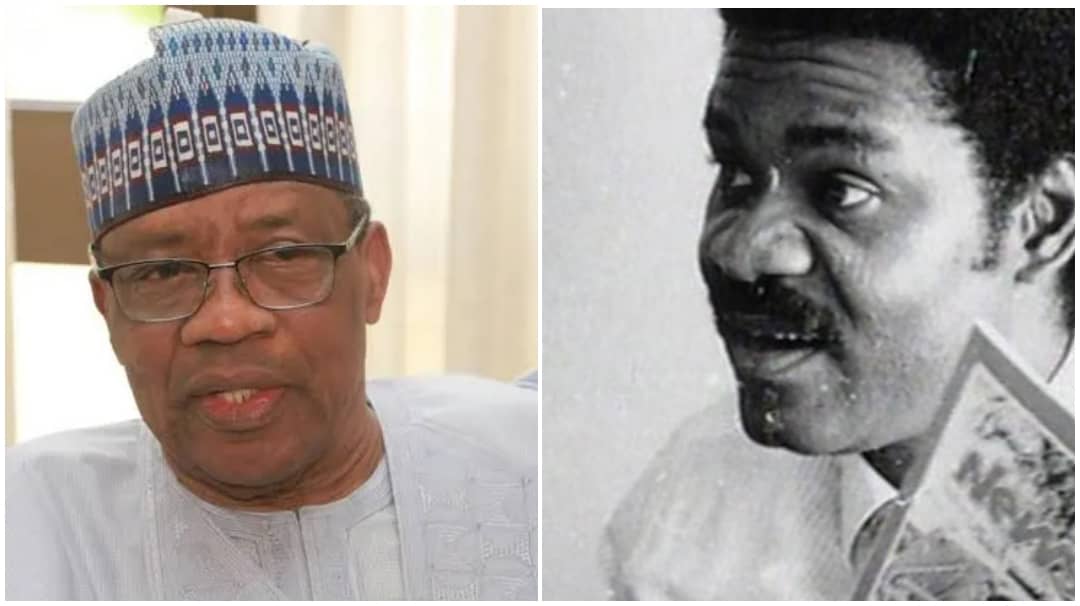
Introduction
Dele Giwa, a Nigerian journalist and founding editor of "Newswatch", a groundbreaking investigative magazine renowned for its fearless exposés on corruption, human rights abuses, and polit
...
Introduction
Dele Giwa, a Nigerian journalist and founding editor of "Newswatch", a groundbreaking investigative magazine renowned for its fearless exposés on corruption, human rights abuses, and political misconduct, was assassinated via a letter bomb on October 19, 1986, in Lagos. This method of killing—unprecedented in Nigeria at the time—marked his death as one of the nation’s most notorious unsolved crimes.
Background on Dele Giwa
Born Sumonu Oladele "Dele" Giwa on March 16, 1947, in Ile-Ife, Nigeria, Giwa began his journalism career at the "Daily Times" before co-founding "Newswatch" in 1984. Under his leadership, the magazine gained acclaim for its bold investigative journalism, often challenging the military regime of General Ibrahim Babangida.
Events Leading to His Assassination
In the weeks preceding his murder, Giwa faced intense scrutiny from Nigerian intelligence agencies. He was interrogated by the State Security Service (SSS) over unfounded allegations of plotting a socialist revolution and had been investigating sensitive topics, including government corruption and drug trafficking. On October 18, 1986, a day before his death, Giwa was questioned by security officials Colonel Halilu Akilu (Director of Military Intelligence) and Lieutenant Colonel A.K. Togun (Deputy Director of the SSS), who allegedly warned him against reporting on military corruption.
The Assassination
On October 19, 1986, a parcel addressed to Giwa arrived at his Ikeja residence. Delivered by his security guard, the package exploded when opened in his living room, inflicting catastrophic injuries. His colleague, Kayode Soyinka, who survived the blast, described the scene as gruesome, with Giwa’s lower body obliterated. Rushed to the hospital, Giwa died shortly thereafter. The use of a letter bomb—a first in Nigeria—ignited public outrage and fear, particularly among journalists.
Investigation and Controversy
The investigation into Giwa’s murder was mired in controversy. Despite circumstantial evidence implicating high-ranking officials, including Akilu and Togun, the government denied involvement. The probe faced accusations of opacity, witness intimidation, and deliberate cover-ups. General Babangida’s regime rejected calls for an independent inquiry, and no prosecutions followed.
Impact and Legacy
Giwa’s assassination reverberated globally, underscoring the perils of journalism under authoritarian rule. It catalyzed a climate of caution among Nigerian reporters, chilling investigative efforts. Though *Newswatch* continued publishing, it never replicated its earlier audacity. Giwa’s unsolved death became emblematic of press freedom struggles, cementing the Babangida regime’s reputation for repression.
Recent Update
In February 2025, former Nigerian military president General Ibrahim Babangida released his autobiography, "A Journey in Service," in which he addressed longstanding allegations regarding his involvement in the 1986 assassination of journalist Dele Giwa. Babangida denied any involvement in Giwa's death, expressing hope that the true perpetrators would eventually be identified. He criticized the media's adversarial stance toward the government during the investigation, suggesting it hindered the discovery of new evidence. Babangida noted that when the Obasanjo administration reopened the case through the Oputa Panel on Human and Civil Rights, no new findings emerged, leaving the murder unsolved.
In response to Babangida's assertions, Richard Akinnola, Executive Director of the Centre for Free Speech Organisation, challenged the former president's claims. Akinnola accused Babangida of misrepresenting facts, particularly regarding the Supreme Court's 1987 decision that allowed Chief Gani Fawehinmi to pursue a private prosecution of the security chiefs implicated in Giwa's murder. Akinnola also highlighted that during the Oputa Panel hearings, retired Commissioner of Police Abubakar Tsav testified under oath that his investigation pointed toward the Babangida government, contradicting Babangida's statement about the absence of new evidence.
The exchange between Babangida and Akinnola underscores the enduring controversy surrounding Dele Giwa's assassination, a case that remains unresolved nearly four decades later.
Conclusion
Decades later, Dele Giwa’s assassination remains a dark chapter in Nigeria’s history, symbolizing the dangers faced by truth-seekers in oppressive environments. The unresolved crime stands as a haunting reminder of the ongoing fight for justice and free expression in Nigeria.