

Nigeria News
Hon. Abiola Makinde Presents A Bill at the Federal House of Representatives to Protect Human Rights Defenders
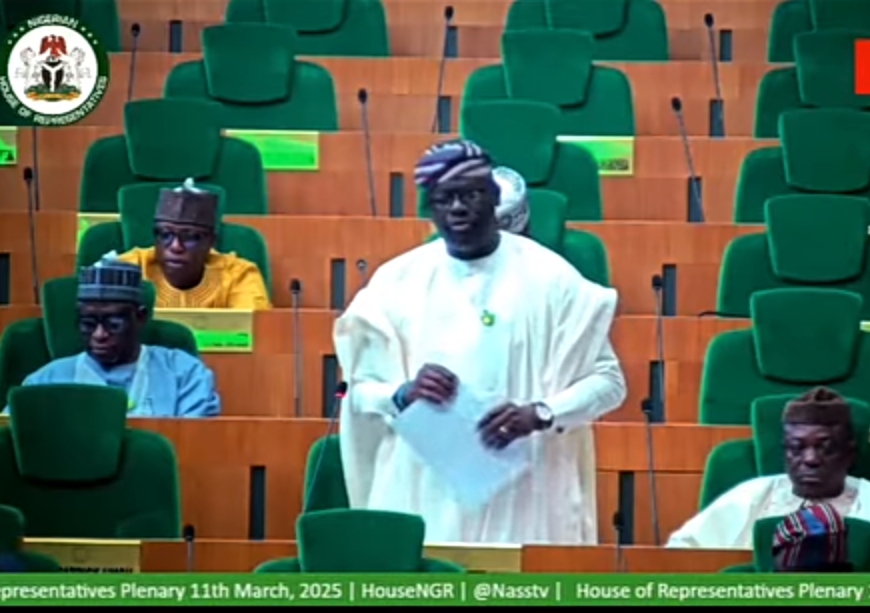 Nigerian In a significant step toward bolstering human rights protections in Nigeria, the House of Representatives today passed the second reading of the Bill for an Act to Recognize and Enhance the CNigerian In a significant step toward bolstering human rights protections in Nigeria, the House of Representatives today passed the second reading of the Bill for an Act to Recognize and Enhance the Capacity of the Government of Nigeria to Protect Human Rights Defenders and for Related Matters (HB. 1867). The bill, presented earlier today at plenary by Honorable Abiola Peter Makinde (HAM), aims to establish a robust legal framework to safeguard human rights defenders across the country. Co-sponsored by Honorable Mudashiru Lukman, the legislation reflects Nigeria's growing commitment to aligning with international human rights standards.
-
Recognition and Protection: Formally acknowledging human rights defenders and guaranteeing their safety while they advocate for justice and equality.
-
Fundamental Rights: Ensuring defenders have the right to access information, form organizations, receive funding, and communicate freely with both national and international human rights bodies.
-
Obligations of State and Non-State Actors: Mandating both government entities and private organizations to respect and support the work of human rights defenders.
-
Remedies and Enforcement Mechanisms: Establishing clear pathways for redress and accountability in cases of violations against defenders.
Supreme Court Dismisses PDP’s Appeal, Upholds Lucky Aiyedatiwa as Ondo State Governor
 The Supreme Court of Nigeria has dismissed an appeal filed by the Peoples Democratic Party (PDP) and its governorship candidate, Agboola Ajayi, challenging the election of Governor Lucky Aiyedatiwa as
The Supreme Court of Nigeria has dismissed an appeal filed by the Peoples Democratic Party (PDP) and its governorship candidate, Agboola Ajayi, challenging the election of Governor Lucky Aiyedatiwa as the legitimate governor of Ondo State. In a unanimous decision delivered on Tuesday, the apex court described the appeal as "baseless, frivolous, and lacking in merit," effectively putting an end to the legal battle over the governorship election.
The lead judgment, delivered by Justice Garba Lawal, upheld the earlier rulings of the Ondo State Governorship Election Petition Tribunal and the Court of Appeal, both of which had affirmed Aiyedatiwa’s victory in the election held on November 16, 2024. The Supreme Court’s decision marks the final judicial pronouncement on the matter, solidifying Aiyedatiwa’s position as the duly elected governor of Ondo State.
Background of the Case
The legal dispute arose following the Ondo State governorship election, in which Lucky Aiyedatiwa, the candidate of the All Progressives Congress (APC), emerged victorious. Agboola Ajayi, representing the PDP, contested the outcome, alleging electoral irregularities, including voter intimidation, manipulation of results, and non-compliance with electoral laws. The PDP and Ajayi subsequently filed a petition at the Ondo State Governorship Election Petition Tribunal, seeking to nullify Aiyedatiwa’s victory and declare Ajayi the rightful winner.
The tribunal, after reviewing evidence and arguments from both sides, dismissed the petition, ruling that the PDP and Ajayi failed to substantiate their claims with credible evidence. Dissatisfied with the tribunal’s decision, the petitioners appealed to the Court of Appeal, which also upheld Aiyedatiwa’s election in a judgment delivered earlier this year. The PDP and Ajayi then escalated the matter to the Supreme Court, arguing that the lower courts erred in their rulings.
Supreme Court’s Ruling
In its judgment, the Supreme Court found no compelling reason to overturn the decisions of the tribunal and the Court of Appeal. Justice Garba Lawal, who read the lead judgment, emphasized that the appellants failed to provide sufficient evidence to prove their allegations of electoral malpractice. The court noted that the burden of proof rested on the PDP and Ajayi, and they did not meet the legal threshold required to challenge the election results.
“The appeal is devoid of merit,” Justice Lawal stated. “The appellants have not demonstrated any miscarriage of justice or violation of electoral laws that would warrant the nullification of the respondent’s election. This court will not entertain frivolous claims aimed at undermining the democratic process.”
The apex court also criticized the petitioners for what it described as an attempt to waste judicial time with unsubstantiated allegations. The dismissal of the appeal was unanimous, with all justices on the panel concurring with the lead judgment.
Reactions to the Verdict
Governor Lucky Aiyedatiwa, in a statement issued shortly after the ruling, described the Supreme Court’s decision as a "triumph of democracy and the will of the people of Ondo State." He expressed gratitude to the judiciary for upholding justice and urged residents of the state to support his administration’s efforts to deliver good governance.
“This victory is not just for me or the APC, but for every citizen of Ondo State who believes in the power of their vote,” Aiyedatiwa said. “I call on all political actors to put aside partisan differences and join hands with me to move our state forward.”
On the other hand, the PDP and Agboola Ajayi expressed disappointment with the ruling. In a press conference held in Akure, Ajayi maintained that the election was marred by irregularities and vowed to continue advocating for electoral reforms in Nigeria. “While we respect the Supreme Court’s decision, we remain convinced that the voices of the people were suppressed during the election,” he said. The PDP leadership has yet to issue an official statement on its next steps.
Implications of the Ruling
The Supreme Court’s decision brings closure to months of legal uncertainty in Ondo State, allowing Governor Aiyedatiwa to focus on governance without the distraction of ongoing litigation. Aiyedatiwa, who assumed office following the death of his predecessor, Governor Rotimi Akeredolu, in December 2023, has promised to prioritize infrastructure development, healthcare, and education in the state.
Political analysts view the ruling as a significant boost for the APC in the South-West region, reinforcing the party’s dominance in Ondo State. However, it also highlights ongoing debates about the integrity of Nigeria’s electoral process, with opposition parties frequently raising concerns about transparency and fairness in elections.
Conclusion
With the Supreme Court’s verdict, the chapter on the 2020 Ondo State governorship election dispute is officially closed. As of March 11, 2025, Governor Lucky Aiyedatiwa remains the constitutionally recognized leader of Ondo State, tasked with steering the state toward progress amid high expectations from its citizens. The ruling serves as a reminder of the judiciary’s pivotal role in Nigeria’s democracy, even as calls for electoral reform continue to echo across the political landscape.
Breaking News: Nasir El-Rufai Resigns From APC
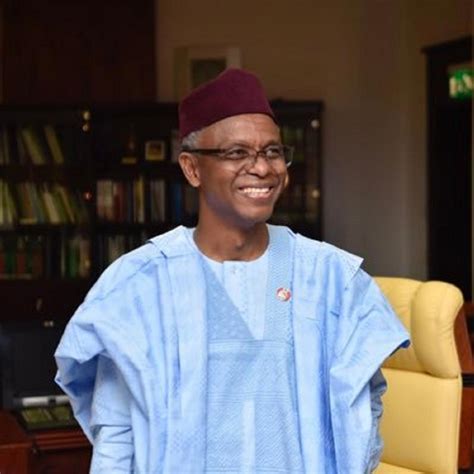 Nasir El-Rufai’s resignation from the All Progressives Congress (APC) on March 10, 2025, marks a significant shift in Nigeria’s political landscape, reflecting both personal disillusionment and broa
Nasir El-Rufai’s resignation from the All Progressives Congress (APC) on March 10, 2025, marks a significant shift in Nigeria’s political landscape, reflecting both personal disillusionment and broader tensions within the ruling party. As a former Governor of Kaduna State and a founding member of the APC, El-Rufai played a pivotal role in the party’s formation in 2013 and its electoral successes in 2015, 2019, and 2023. His departure, followed by his decision to join the Social Democratic Party (SDP), underscores a growing rift between his progressive ideals and the current trajectory of the APC under President Bola Tinubu’s administration.N171.64bn Proposed Lekki International Airport Set for Site Inspection and Review
 Lagos, Nigeria – March 9, 2025 – In a significant step toward transforming Lagos into a global aviation and economic hub, Governor Babajide Sanwo-Olu has announced that the proposed Lekki Internation
Lagos, Nigeria – March 9, 2025 – In a significant step toward transforming Lagos into a global aviation and economic hub, Governor Babajide Sanwo-Olu has announced that the proposed Lekki International Airport, with an estimated first-phase cost of N171.64 billion (approximately $450 million), is scheduled for a site inspection and review by aviation regulators next week. The announcement was made on Saturday during a guided tour of Alaro City and the Universal One Development along the Lekki-Epe Expressway, where the governor was accompanied by members of the Lagos State Executive Council and top government officials.